Sleep, explained
How Adjustable Beds Change Sleep Positioning and Bed Setup
A bed that shifts with you can turn a familiar flat surface into a more flexible place to sleep, read, or unwind. But adjustable bases are not simply a matter of pressing a button: mattress compatibility, room layout, pillow support, and everyday habits all shape how useful the change will feel.
Published November 23, 2026
For generations, the bed has been imagined as a horizontal plane: a mattress, a pillow, a duvet, and the quiet expectation that the body will find its preferred position. An adjustable bed complicates that picture, in the best sense. By raising or lowering the head and foot of the sleep surface, an adjustable base gives sleepers another way to arrange the body and the bed around daily life.
The appeal is easy to understand. A gentle incline can make reading more comfortable; elevating the legs may feel welcome after a long day on your feet; and some people simply enjoy changing their posture rather than remaining flat. Yet adjustability is not an automatic route to better sleep. Comfort is personal, and the base works only as part of a system that includes a compatible mattress, suitable bedding, enough space, and realistic expectations.
Before choosing an adjustable bed, consider how you sleep now, what you hope to change, and whether your existing mattress can safely flex with the base. A thoughtful setup begins with those practical questions—not with the assumption that more positions necessarily mean more rest.
What an adjustable bed actually changes
An adjustable bed is generally a mattress paired with a movable foundation, often called an adjustable base. Motors alter the angle of sections beneath the mattress. Many models raise the head, the foot, or both; some offer preset positions, while others allow gradual adjustments through a remote or control panel. Features vary, so it is worth checking the specific base’s instructions rather than assuming every model moves in the same way.
Changing the angle changes how the body is supported and how the mattress meets it. When the head section rises, the torso and head move into a more upright position. When the foot section lifts, the legs are elevated. Raising both ends can create a relaxed, shallow curve. These arrangements are sometimes referred to as “zero gravity” or lounge positions, but such names are labels for settings, not guarantees of a particular health outcome.
It can be useful to think of adjustment as a matter of comfort and convenience. A position that feels pleasant for a few minutes may not suit a whole night. A setting that works for reading may feel too upright for sleep. The best angle is not necessarily dramatic; small changes can be more comfortable and easier to maintain.
Sleep positioning: comfort before complexity
Sleep position is shaped by habit, anatomy, the mattress, and the needs of the moment. An adjustable base adds another variable, but it does not erase the importance of a supportive, comfortable surface. The aim is to find a position that feels relaxed and sustainable, without creating new pressure or strain.
For someone who likes to read or watch a screen in bed, raising the head can reduce the effort of propping up the torso with a stack of pillows. That may make the transition from evening activity to rest feel more considered. However, an upright position can put pressure on the lower back or neck if it is too steep, and a pillow that is too tall may push the head forward. Try the setting while awake, then make small adjustments until the shoulders and neck feel at ease.
Some sleepers prefer a slight incline while resting. Others find that a flat position remains most comfortable. Elevating the legs may feel soothing after standing or sitting for long periods, but it is not a universal solution for discomfort. If you have persistent pain, swelling, breathing concerns, reflux symptoms, or another ongoing health issue, ask a qualified clinician for guidance about positioning. An adjustable bed is a piece of furniture, not a substitute for medical assessment or treatment.
It is also worth observing how you move during the night. A position that feels comfortable at bedtime may not remain ideal after several hours, especially if you change between side, back, and stomach sleeping. Begin with a modest incline, notice whether you wake feeling comfortable, and adjust gradually. A brief trial can tell you more than an elaborate list of presets.
Mattress compatibility is the essential first check
The most important technical question is whether the mattress is designed to flex on the particular adjustable base. A mattress needs to bend with the platform without losing its structure, shifting excessively, or conflicting with the base’s movement. Compatibility depends on the mattress construction and the base, so verify both manufacturers’ guidance before setting up or purchasing a combination.
Foam, latex, hybrid, and other mattress designs can differ in how they respond to repeated bending. The material name alone does not establish compatibility. A mattress may be flexible enough in principle but still have restrictions related to its construction, thickness, support system, or warranty. Conversely, some mattresses are explicitly described as suitable for adjustable bases. Look for clear written confirmation for the specific model, and follow any instructions concerning minimum or maximum mattress thickness, weight limits, and positioning.
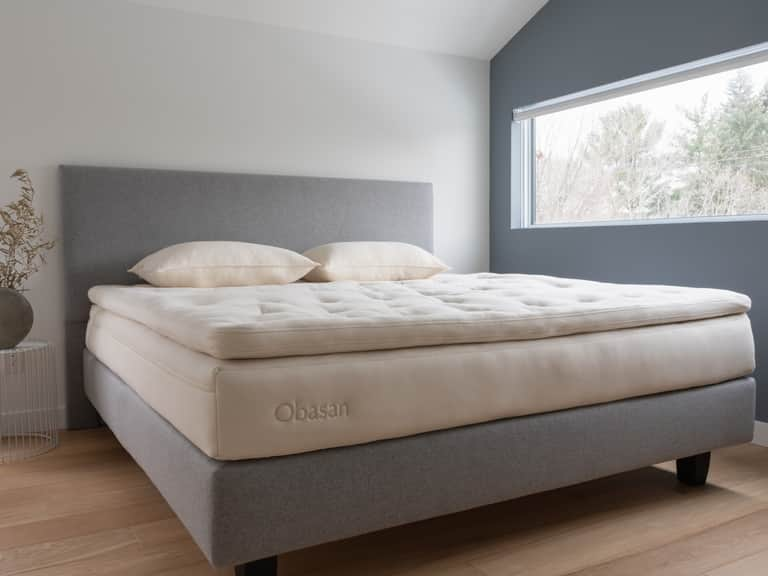
For example, the product information for the Naturally Organic Hudson Luxe Latex Mattress identifies it as compatible with an adjustable base. The Obasan Classic Dunlop Latex Mattress is also listed as compatible. These details illustrate why checking a mattress’s individual specifications matters; they are not a substitute for confirming compatibility with the particular base you plan to use.
Warranty language deserves a close reading. A mattress warranty may set conditions for the foundation or support surface, and an unsuitable base could affect coverage. Confirm what the mattress maker permits, what the adjustable-base maker requires, and whether the proposed combination meets both sets of instructions. Keep the product documentation somewhere accessible in case you need to refer to it later.
If you already own a mattress, do not assume that it will work simply because it bends when pushed by hand. Ask the manufacturer whether it can be used on an adjustable base, and whether there are restrictions on repeated flexing. If the answer is unclear, get clarification before buying the base. A little research now can prevent an expensive mismatch later.
A more considered bed setup
An adjustable base changes more than the mattress angle. It can alter the way pillows sit, how sheets move, where bedside objects belong, and how much clearance is needed around the frame. Treat the setup as a small room-design project, with comfort and safe operation as priorities.
- Measure the room. Check the bed’s footprint and the amount of space needed around it. Consider nearby walls, nightstands, drawers, doors, and any furniture that may interfere when the base changes position.
- Plan for cables. Locate outlets before installation and route cords according to the manufacturer’s directions. Keep cables clear of moving parts and places where feet or wheels might catch them.
- Check the floor and frame. Follow the base maker’s instructions for floor placement, legs, headboards, and any existing bed frame. Do not improvise a support arrangement that has not been approved.
- Consider access. Make sure the remote or controls are easy to reach from the bed, and establish a place for them where they will not be lost in bedding.
- Review the household routine. Think about who will use the bed, how often positions will change, and whether the controls are simple enough for everyone who needs them.
Sheets are another small but consequential detail. A fitted sheet must accommodate the mattress depth and stay secure as the surface moves. Deep pockets or elastic construction may help, but fit varies by mattress and base. Follow bedding-care instructions, and avoid tucking fabric in a way that could restrict movement. If bedding bunches, pulls tight, or comes loose during adjustment, reassess the size and fit before regular use.
Layering can affect how a mattress responds, too. A thick topper or loosely fitted protector may shift as the base changes angle. If you use a mattress pad, topper, or protector, check whether it remains secure through the positions you expect to use. Keep layers smooth and avoid excessive bulk that could bunch beneath the body.
How to test positions without overthinking them
A simple, repeatable trial is more useful than cycling rapidly through every available setting. Start with the bed flat and note how it feels. Raise the head slightly, pause, and notice the support beneath your shoulders, neck, and lower back. If the base allows, adjust the foot section in small increments. Return to flat whenever a position feels uncomfortable.
Test likely uses separately. Try one arrangement for reading, another for winding down, and a preferred sleep position once you are ready to rest. Keep the same pillow and bedding during the initial comparison so you can tell whether the change in angle, rather than a new accessory, is making the difference. If a setting feels good only while you are actively holding your body in place, it may not be a practical overnight position.
Give yourself time to learn the controls. A remote may include separate buttons for the head and foot, memory settings, or additional functions. Read the manual, understand how to return the bed to flat, and check whether the controls require batteries or have a charging routine. If more than one person shares the bed, agree on how adjustments will be made so that one sleeper’s preferred position does not surprise the other.
It can help to keep a brief note of what you tried and how it felt the following morning. The point is not to turn sleep into a performance review; it is simply to identify patterns. A small incline may feel pleasant, while a more pronounced one may lead to stiffness. A position that supports a comfortable evening routine may not suit the entire night. Let your experience guide the setup.
Shared beds and split configurations
When two people share a bed, preferences may not align. One sleeper may enjoy an elevated head position, while the other prefers a flat surface. Some adjustable systems use a split design that allows each side to move independently, while others move as a single unit. The distinction affects not only comfort but also mattress selection, bedding, frame dimensions, and how the bed looks when made.
Before choosing a split setup, check whether the base and mattress are designed for that configuration and whether the two sides can be controlled separately. Consider how a split will affect sheets and blankets, and whether the seam between the sides matters to either sleeper. If the bed will be placed against a wall or enclosed by a frame, verify that both sections can operate freely.
Communication is part of the setup. Agree on a default position, decide how changes will be signaled, and avoid adjusting the bed abruptly while the other person is asleep. A control system may make separate preferences possible, but a calm shared routine still matters.
Everyday care and practical expectations
Like any mechanical furniture, an adjustable base has operating guidance that should be followed. Assemble it as directed, observe stated weight limits, and keep the moving sections free of objects. Do not reach underneath the base while it is operating. If the manufacturer recommends periodic checks or particular care, follow those instructions rather than relying on guesswork.
Noise, movement, or a change in performance may be a reason to stop and consult the manual or customer support. Avoid attempting repairs on motors or electrical components unless the manufacturer specifically directs you to do so. If the base stops responding, use the troubleshooting steps provided for that model and keep the mattress and bedding clear while investigating.
It is also helpful to think about the long-term routine. If you expect to adjust the bed every evening, the controls should feel intuitive and the room arrangement should make them convenient. If you are mainly interested in occasional leg or head elevation, a simpler model may be sufficient. Features are only valuable when they solve a real need and are easy to use in daily life.
Questions to ask before choosing
A clear checklist can make the decision less abstract. Before purchasing, consider:
- Does the mattress manufacturer explicitly permit use on an adjustable base?
- Does the base support the mattress size, construction, and weight?
- What movements are available, and which will you realistically use?
- Will the bed fit the room and operate without contacting nearby furniture?
- Are the controls easy to reach and understand?
- Will your sheets, protector, and any topper stay in place as the bed moves?
- What do the warranty and return terms say about the mattress-base combination?
- Are there persistent symptoms or medical concerns that should be discussed with a healthcare professional first?
These questions shift the conversation from novelty to usefulness. An adjustable bed is not inherently better than a conventional bed, and it does not guarantee deeper sleep. Its value lies in whether its range of positions makes your own routines more comfortable while working reliably with the mattress and the room.
The quiet art of finding your angle
There is a certain luxury in having options, but the most satisfying bed setup is rarely the most complicated one. A modest head elevation, a secure fitted sheet, a well-placed remote, and a mattress approved for the base may be all that is needed. The goal is not to spend the night chasing a perfect setting; it is to create a comfortable environment that asks less of the body and fits naturally into the way you live.
Begin with compatibility, make the room ready, and experiment gently. Notice which positions feel relaxing and which become distracting. If discomfort persists, seek professional advice rather than relying on a bed adjustment to diagnose or resolve it. With a little care, an adjustable base can offer a more adaptable approach to rest—one thoughtful angle at a time.